Between Czechs and Germans: Jewish Identity, Nationalism and Antisemitism — An Interview with Hillel J. Kieval
Between Czechs and Germans: Jewish Identity, Nationalism and Antisemitism
Interview by Yvonne Pěnkavová | June 15, 2022 | Originally conducted for Maskil
How did Jews navigate the national conflict between Czechs and Germans? What role did Jewish emancipation, Zionism, and antisemitism play in shaping modern Jewish identity in the Czech lands? And how did the legacy of the Hilsner Affair influence Czech-Jewish relations?
In this interview, historian Hillel J. Kieval, discusses his research into Czech-Jewish integration, the competing national movements of the late nineteenth century, the political significance of the Hilsner Affair, and the changing position of Jews in Czech society.
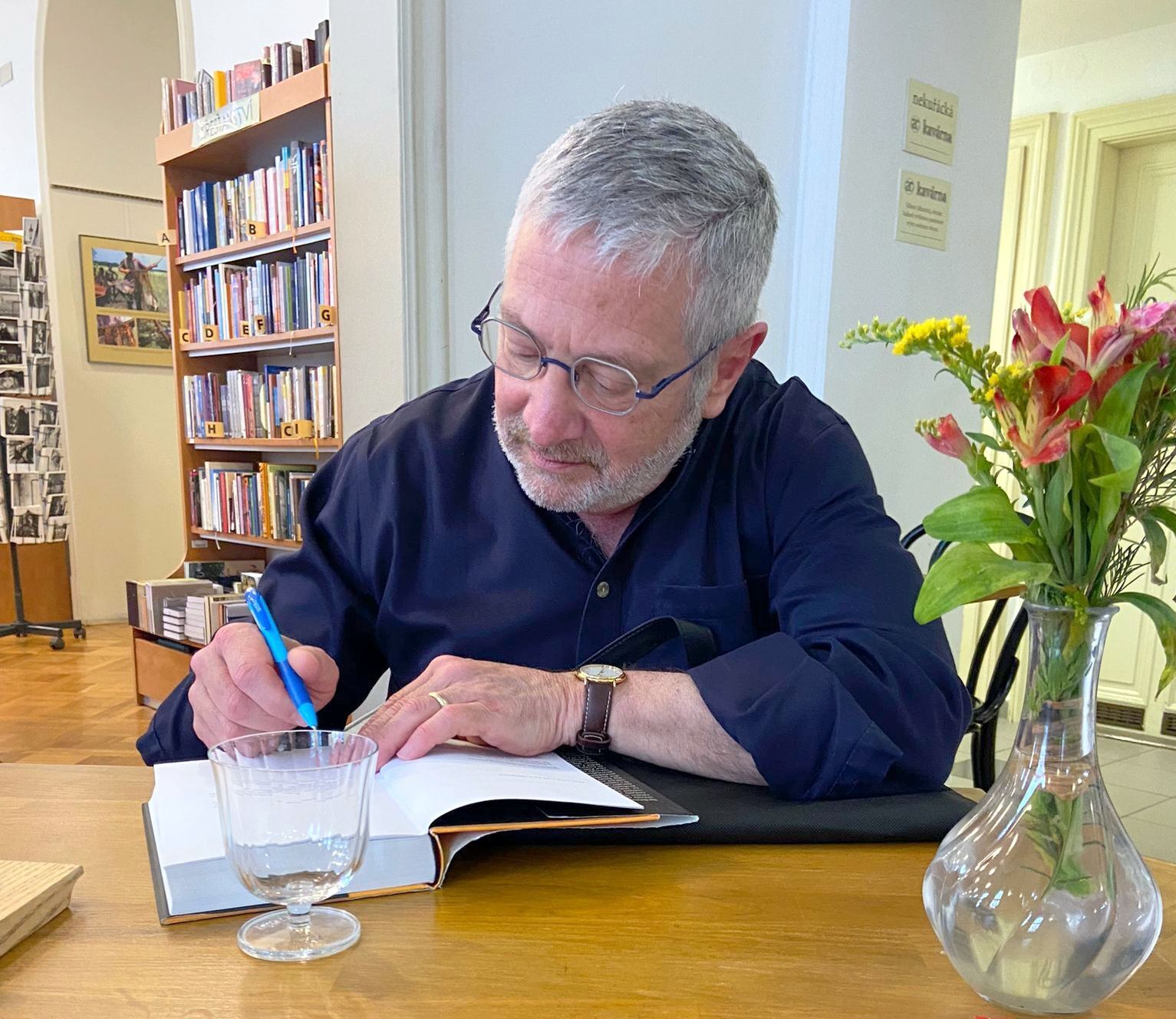
Hillel J. Kieval is an internationally recognized historian and professor of Jewish history at Washington University in St. Louis. His research focuses on modern Jewish history in Central Europe, particularly the relationship between national identity, political conflict, and Jewish society in the Czech lands. In the 1970s, he conducted research in Prague that formed the basis of his influential book, The Making of Czech Jewry: National Conflict and Jewish Society in Bohemia, 1870–1918. During his academic visit to Charles University in 2022, Professor Kieval taught a course examining the history of ritual murder accusations. It was during this visit that Yvonne Pěnkavová interviewed him for Maskil.
This interview was conducted by Yvonne Pěnkavová on June 15, 2022, for Maskil and is republished here with minor editorial revisions for clarity and readability.
Discovering Czech-Jewish History
Your research focuses on a very specific period of Czech Jewish history, namely the years 1870 to 1918. What led you to this topic?
I was interested in Jewish history from the beginning of my studies at Harvard. I studied history and literature, focusing on modern European literature, and managed to combine my program with courses in Jewish history. For my master's thesis, I focused on the Holocaust in France. I had the opportunity to participate in a study program in Paris, where I researched underground networks helping Jewish refugees escape Nazi-occupied France. I wrote about a clandestine organization that attempted to bring Jewish children to safety. Through connections with orphanages, forged documents, and dangerous border crossings, children were transported to Switzerland and beyond.
However, the Holocaust is not a subject I felt I could study intensively for many years. It is emotionally overwhelming, and I knew I did not want to focus on it throughout my career. A year of study in Basel shifted my scholarly interests toward Central Europe. I wanted to explore the modern history of Jews in this region, particularly the turn of the nineteenth and twentieth centuries, when new conceptions of Jewish identity and thought were emerging, alongside political movements and ideologies, including Zionism. I was also influenced by a remark from my professor, Yosef Yerushalmi, who encouraged me to study how Jews lived, not only how they died.
The combination of these factors, together with my interest in national conflict, led me to Prague.
I knew I wanted to explore modern Jewish history in the Czech lands, but I did not want to focus exclusively on Prague's German-Jewish milieu, about which much had already been written. Scholars tended to assume that knowledge of German was sufficient for researching Jewish history in Bohemia. I wanted to offer a different perspective, so I turned to Czech-Jewish integration. I began learning Czech and enrolled in a summer school of Slavic studies. That was in 1975, nearly half a century ago.
I focused on how the national conflict between Germans and Czechs shaped Jewish history and the formation of Czech Jewry. This became the subject of my dissertation, which was later published as a book.
Between Czech and German Identity
In the Western world, Prague's Jewish history is often associated primarily with its German-speaking milieu. In the Czech lands, by contrast, Jewish history tends to be presented from a Czech perspective. The Prague Jewish community rarely refers to its German past. Have you noticed this tendency? And what was it like to research such a politically sensitive subject?
Yes, this tendency was very apparent. I noticed, for example, that the German inscriptions on the stained-glass windows of the Jerusalem Synagogue had been blacked out. In the 1970s, it was not acceptable to speak openly about Jewish nationalism or identity. I knew my research touched on political movements and ideologies that were unwelcome at the time, including Zionism. Officially, I was researching Jewish integration, but naturally I encountered sensitive issues.
I remember that when I was conducting research at the Jewish Museum, I had no difficulty obtaining copies of Czech-language Jewish periodicals such as Rozvoj or Českožidovské listy. But when I requested copies of German-language publications such as Selbstwehr, I was refused. I was advised to request them instead from the National Library at the Klementinum.
Of course, this is also connected to the Czechoslovak government's postwar efforts to transform the country into a predominantly Czech nation-state. The expulsion of the German population was accompanied by an emphasis on Czech history and national narratives. Could this explain why researchers studying Jewish history in the Czech lands sometimes encounter the opposite perspective, in which Jewish history is presented as primarily Czech?
Franz Kafka is a good example. Until 1989, he was almost unknown to Czech readers. Because he was part of German culture—and additionally viewed by the communists as bourgeois—he was concealed from the public by the regime. The situation changed with the Velvet Revolution. Today, Kafka may be a tourist attraction, but that is still better than being a persona non grata in Czech culture.
I see a problem in the polarization of society throughout modern Czech history, where one is forced to choose whether to belong to the Czech or German side, and to engage either with Czech or German culture. The truth is, the majority of people in the Czech lands were bilingual and interacted with both worlds. Even František Palacký wrote his book first in German, and Tomáš Masaryk had to learn Czech in order to teach at a Czech university.
You suggest that bilingualism and fluid national identities were common in the Czech lands. Yet nationalist politicians frequently portrayed Jews, through antisemitic rhetoric, as enemies of the Czech nation. Why were Jews particularly targeted for this ambiguity when it was hardly unique to them?
Jews were particularly frustrating to nationalists because it was difficult to determine their national loyalties or predict how those loyalties might develop. Nationalists were irritated by this apparent indifference. They wanted people to choose a side. Sending one's children to a German-language school, for example, could be regarded as an act of betrayal.
Jews did not necessarily behave differently from much of the population of Bohemia, yet nationalists viewed them with particular suspicion. Their national loyalty was constantly questioned. These tensions were also connected to the centralization and modernization policies introduced under Joseph II. His reforms sought to integrate Jews into the state through institutions operating primarily in German. German-language Jewish schools were established, Jews were required to adopt fixed German surnames, and German-language education was encouraged or imposed. German acculturation became closely associated with participation in the modern state.
Jews generally welcomed modernization insofar as it brought greater freedom of movement, access to education, and professional opportunities. The process of emancipation began with Joseph II's reforms in the 1780s, but unfolded over many decades. In Bohemia, restrictions on Jewish settlement were not substantially relaxed until after 1848, while in Moravia certain Jewish communities retained distinctive political arrangements well into the twentieth century.
The Czech-Jewish Movement and Zionism
"One of the arguments I want to defend in my upcoming book is that the Czech-Jewish movement and Zionism are, in their core ideas, remarkably similar—they are two sides of the same coin."
The association between Jews and Germanness was precisely what August Stein, a founding member of the Association of Czech Jewish Academics in 1876, sought to challenge. He advocated Czech-language education and religious life, believing that identification with the Czech national cause would allow Jews to live peacefully in the Czech lands. How do you view his efforts?
Personally, I agree with the efforts of August Stein. There is no reason why Jews in the Czech lands should have been perceived as Germans. The association between Jews and Germans was the result of a century-old project initiated by the Habsburg monarchy.
One of the arguments I want to defend in my upcoming book is that the Czech-Jewish movement and Zionism are, in their core ideas, remarkably similar—they are two sides of the same coin. Both movements shared the belief that emancipation—Jewish modernization—was an artificial project. While it brought certain advantages, it also fundamentally altered the historical development of Jewish life.
Whereas August Stein fought for the integration of Jews into the Czech nation—alongside Bohumil Bondy, he translated prayers and conducted services in Czech at the Vinohrady Synagogue—Zionists, on the other hand, opposed the idea that Jews should identify with any other nation. They wanted to be recognized as a distinct entity. Both movements, in essence, protested against the Josephinian project of modernization.
Prague Zionism sought to promote bilingualism. They published in both Selbstwehr and Židovské zprávy (Jewish News). Sometimes, the very same articles appeared as direct translations in both publications. But the intention was clear: to symbolize duality and the refusal to choose sides. They wanted Jewish culture to exist without being tied exclusively to either the Czech or German nation.
To me, this represented a glimpse of a promising future for Jews in Europe. Who knows how this trend might have developed if it hadn't been destroyed by the horrors of the Second World War?
In interwar Czechoslovakia, the Zionist party achieved considerable success. Both Beneš and Masaryk were actively interested in Zionism. Beneš's government officially allowed Jews to declare their nationality as Jewish. Masaryk personally visited Palestine, and his intervention in the Leopold Hilsner trial is also noteworthy. Masaryk was a hero to Jews from all political backgrounds in Czechoslovakia.
Masaryk, Antisemitism and the Hilsner Affair
You mentioned Masaryk's position on the Hilsner trial. Did the national question play any role in this context? We know that Hilsner lived with his mother in an apartment within a German school building that local authorities repeatedly tried to shut down.
It is true that Hilsner and his mother lived in a German school building, but the school itself was declining and had very few students. In contrast, Polish Jews had begun declaring Czech as their common language relatively early, compared to other Jewish communities. In my opinion, the main issue was that such a horrific act, which deeply shocked the public, needed an explanation.
Did all the parties involved truly believe in the motive of ritual murder, or could there have been other motivations behind this supposed explanation? For example, Karel Baxa, who represented the victim's family and accused Hilsner of ritual murder, later in his career associated with Jews and supported Jewish movements.
Of course, a certain degree of opportunism was involved, but I believe that the majority of society genuinely believed in the ritual murder motive. It was somehow rooted in popular tradition. For over three hundred years, such accusations were officially considered unacceptable and shameful at the governmental level in Europe. And yet, at the turn of the nineteenth and twentieth centuries—in a modern state, during an age of rational thinking, and after the technological and scientific revolutions—this accusation re-emerged and was taken seriously.
I spent a great deal of time studying the everyday interactions between Christians and Jews in Europe around 1900. The relationships were close, even intimate; families and neighbors often got along. And still, certain old superstitions continued to exist in popular consciousness. Even Masaryk himself wrote that as a small boy, he would cross the street when a Jew was approaching—an instinct shaped by stories his mother had told him. But of course, a legal trial could not be conducted based on superstition alone. It required evidence, scientific knowledge, and stable pillars for prosecution.
Prosecutors in five similar cases of ritual murder accusations across Europe at roughly the same time were able to present such pillars and persuade authorities of the legitimacy of the charges using the language of modern science.
Baxa indeed promoted the ritual murder accusation and tried to steer the investigation in that direction. Whether he did so for nationalistic reasons, to gain public popularity, or because of a personal belief that fanatics existed among the Jews—we can only speculate. Baxa later became mayor of Prague. We see similar examples elsewhere. For instance, the mayor of Vienna rose to popularity through his outspoken antisemitism—even in a city where Jews made up 20% of the population. Later, he collaborated with Jewish groups and was harshly criticized and labeled a hypocrite. His infamous reply was: "I decide who is a Jew."
Masaryk, as you mentioned, was a hero to the Jewish community. For his intervention in the case of Leopold Hilsner, he was harshly criticized by Czechs and exposed his family to serious danger.
Indeed, Masaryk's decision to get involved in the Hilsner case was extremely unpopular, and he risked both his reputation and his family's safety. He managed to invalidate the first verdict from Kutná Hora, but only with great difficulty. The Austrian authorities initially even refused to distribute his publication The Need to Revise the Polná Trial. The public reaction was intense. Masaryk had to send his wife and daughter to safety in England, while he remained in Bohemia under threat of death. Even students protested during his lectures. When he turned to the university leadership for support, they advised him to resign. Even the university condemned his actions. At the same time, mainstream Czech media were denouncing the Dreyfus Affair, which only reinforced the idea of Jews as traitors and culprits.
It's also important to remember that the death of Anežka Hrůzová truly shocked society. Her body was discovered by a group of searchers, cut in half, and no blood was found at the scene. For society, it was easier to blame a group of outsiders—Jews—than to confront the reality of violence against women and perversion within their own ranks.
Czech-Jewish Relations After 1945 and 1989
It is interesting that today, Czech society has a very positive relationship with Jews and is largely unaware of its own antisemitic past. The Czech Republic's friendly stance toward the State of Israel is well known. What changed?
In the early decades of the Soviet regime, antisemitism was a punishable offense. Even after 1945, it was strongly condemned and sometimes criminalized. With the expulsion of the German population, the national conflict was essentially ended, and Jews no longer had to struggle to position themselves between two rival ethnic groups. On the other hand, after 1950, Israel became an enemy state in the eyes of the Soviet regime, and any support for Zionism became punishable. So while antisemitism was officially condemned, strong anti-Zionism took its place.
When I was here in the 1970s, religious services did still take place, but participation meant sacrificing one's future. Jews had to choose between their identity and their prospects. And of course, the Slánský trial was openly antisemitic. The media openly emphasized the Jewish background of the accused, implying guilt by ethnicity. Slánský was essentially accused of Zionism, which was inherently linked to his Jewish identity.
After 1989, there was a major shift, especially in the state's approach. The persecution of Jews under communism prevented Czechs from associating Jews with the communist regime, as happened in Poland. After 1989, the Czech government made a deliberate decision to support and defend the State of Israel internationally—something that remains rather unique in the European context. Naturally, it is much easier for Jews to live in a country that sympathizes with the State of Israel.
In contrast, today in the United States, Jews are experiencing the opposite. I'm not an expert on this topic—I say this simply as an observer. But the fact that the Czech state is pro-Israel significantly eases the lives of Jews living here.
21.11.2026
